
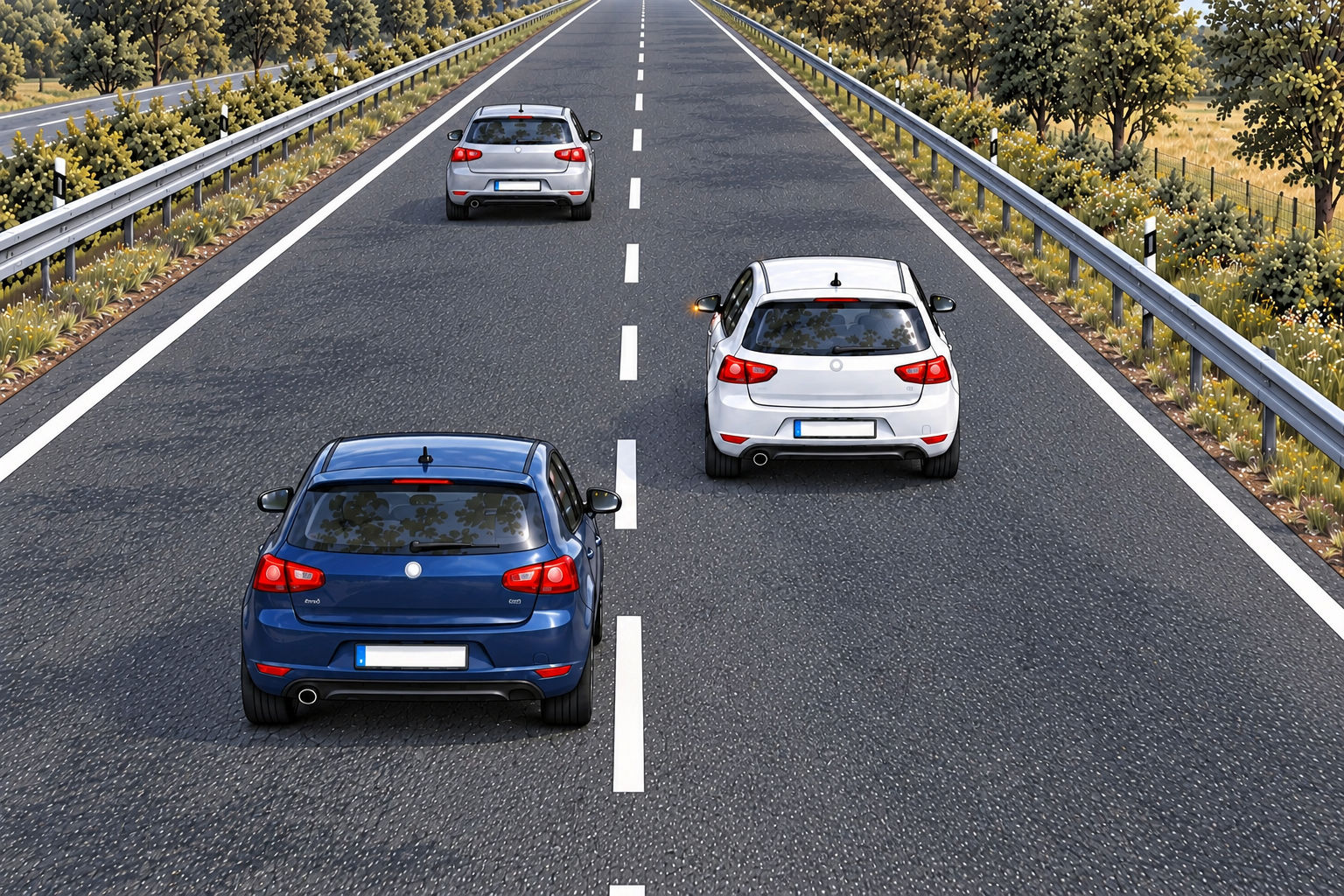
While you are still in your lane
Keep your position as you assess the space. Check ahead, the interior mirror, left mirror and briefly over your left shoulder. Adjust speed as needed before moving. Don't spend so long looking sideways that you lose track of what is happening in front.
Before you steer
The examiner assesses timely observation, giving way and the space you take. Your indicator communicates an intention; it doesn't reserve the next lane. If a gap appears available, Check that it remains safe before making the move.
Complete the move, or wait
If it is still safe, move smoothly into the lane, settle your position and cancel the indicator. If the gap closes before you leave your lane, stay where you are and reassess. You can change your plan without forcing other drivers to change theirs. You need a gap that exists now, not one you remember finding.
The lane is ending. Does the gap become yours?
No. A lane ending changes the urgency of planning, not the need for a safe lateral move. Read signs and markings early, adjust speed while you still have room, and assess traffic in the lane you want. Indicating does not force another driver to brake. If the first gap closes, stay controlled and reassess. Near the end of a taper, your options shrink, which is why late observation causes trouble.
What if a faster vehicle appears during the check?
Cancel or delay the move. The point of the mirror and blind-area check is to change your decision when the information changes, not to complete a ritual before steering regardless.
Changing lanes is a special manoeuvre under RVV 1990 Article 54: let other traffic go first. Article 55 requires indicating for a lane change, but the signal does not reserve a gap. Make a new observation immediately before the lateral movement.
Practise it
Ask your instructor to introduce a new vehicle into the scenario and say aloud whether you would still move, before touching the wheel. The same thinking applies at a motorway merge. For the checks themselves, see mirror, signal, shoulder check.
Dutch road traffic regulations (RVV 1990)
Driving Test Decoder
A gap is useful only while it remains open.
Use the guide’s observation and space-and-speed systems to practise a lane change with changing traffic.
Complete guide · €27 + applicable VAT