OBSERVATION · LESSON 01
Your last
look matters.
You checked. You waited. Is it still safe to move?
Learn to connect your observation to the moment you actually pull away.
One situation. One useful driving habit.
See what changes
Understand why your earlier check can go out of date.
Connect look to action
Build the observation sequence before pulling away.
Take it into the car
Leave with a specific practice task for your instructor.
Based on Rijprocedure B, July 2026 · Independent learning support alongside driving lessons.
MIRRORS & BLIND SPOTS · MOVING OFF
Where should you look before moving off?
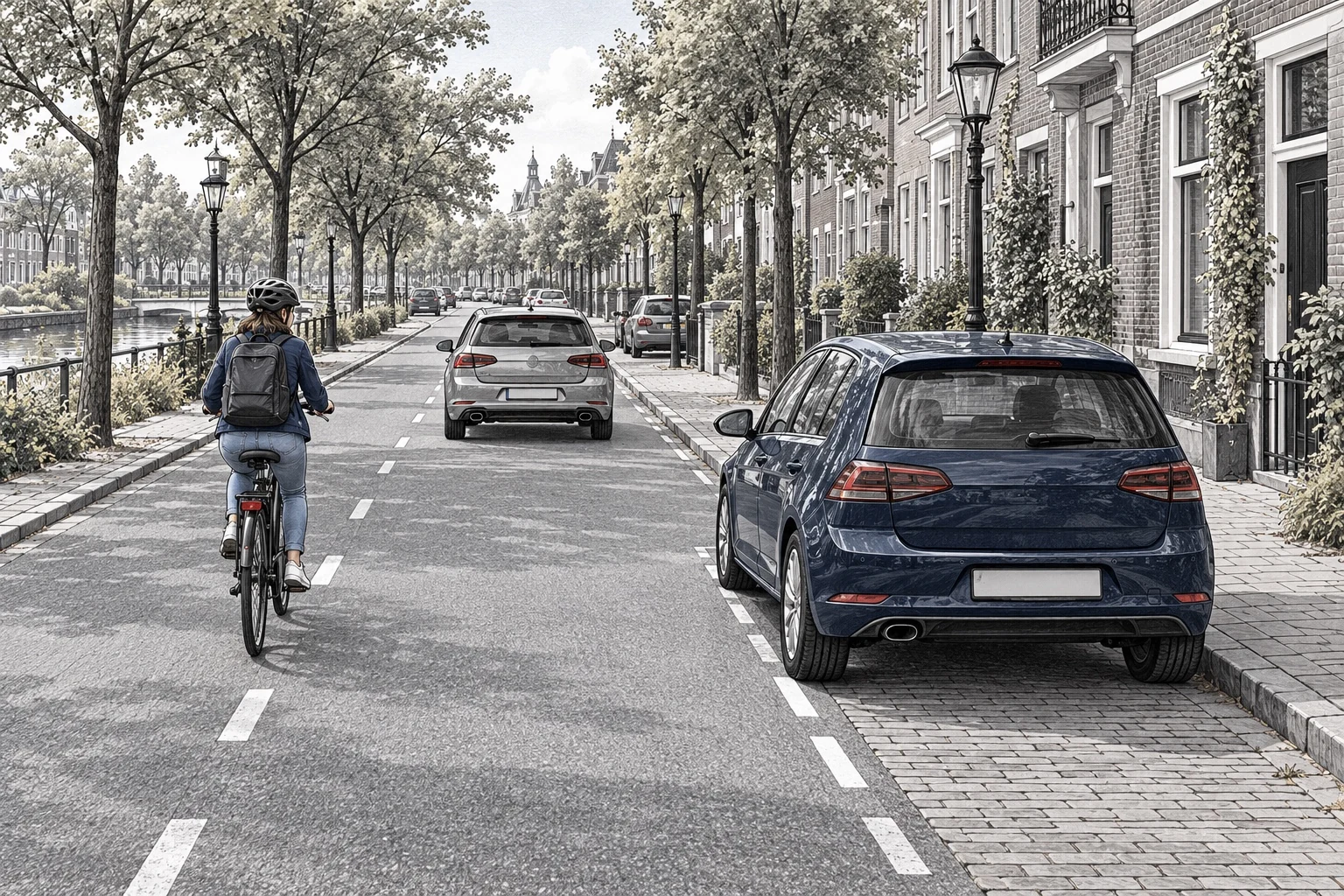
Before pulling away, build a current picture of the road ahead, the traffic behind and the space beside your car. This English-language trainer follows a car parked at the right curb of a Dutch street. A passing car and an approaching cyclist show why an earlier check can become out of date while you wait.
Connect each check to the space you will use
In this right-side departure example, assess traffic through the interior mirror, look ahead, use the left outside mirror and briefly check the left blind spot over your shoulder. Understand what is approaching and whether it affects your intended path. Keep the car stationary while you assess whether you can leave safely.
A looking sequence is useful only when it helps you understand the actual situation. After a pause, update the information that may have changed before acting. Let other road users go first, signal in good time before moving and continue observing as you pull away. The side of departure changes which outside mirror and shoulder check are relevant.
When should you check again after waiting?
If you have waited before moving off, your earlier traffic picture may no longer be current. Update your observation before you act. In the lesson, the cyclist approaches while the blue car waits, so the earlier gap is no longer a reason to move.
Can mirrors replace a shoulder check?
Mirrors do not show every area beside the car. In this example, a brief left shoulder check adds information about the space the car would enter. Return your attention ahead and decide from the whole current picture.
Does this same sequence apply to every manoeuvre?
No. This lesson starts at the right curb, then gives you a transfer exercise from the left side of a one-way street. The relevant outside checks depend on the side of the move and the actual road situation.
In Dutch lessons, observation is discussed as kijktechniek or kijkgedrag. This exercise focuses on wegrijden: pulling away. Use it alongside practice with your driving instructor.
Based on CBR Rijprocedure B, July 2026, §3.1. Driving Test Decoder is independent of CBR.
Next observation lesson: where to look when joining a motorway →