
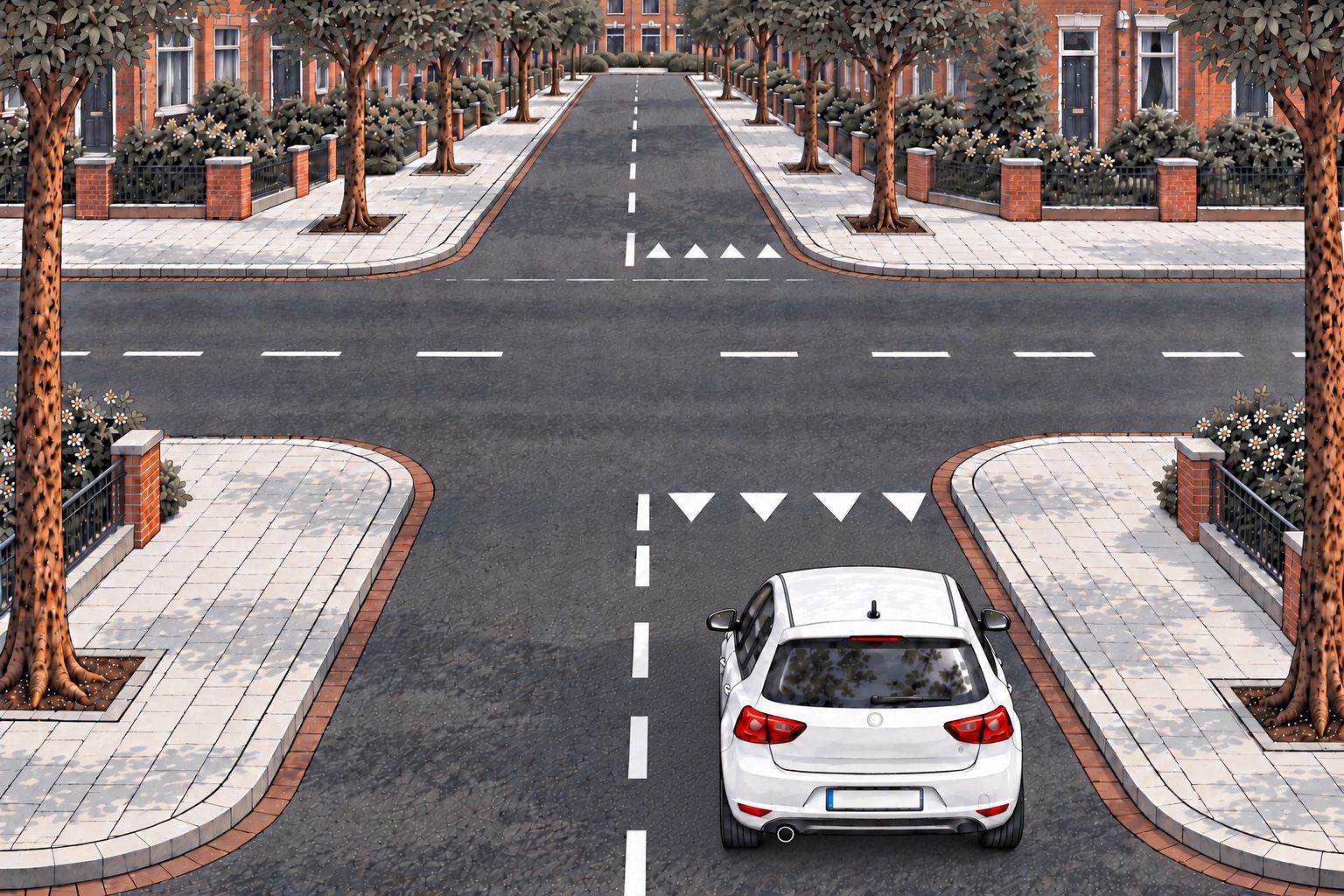
You were being careful. Wasn’t that the point?
Safe waiting is still safe waiting
If you need to wait for a cyclist, a priority vehicle, a closed gap or a blocked junction, wait. The exam is not a competition to make the fastest decision .
The problem is unnecessary waiting after the situation is already clear.
Hesitation often starts earlier
A late look creates a late decision. By the time you have understood the gap, the gap is gone, so you wait for another one. From inside the car it feels like caution. From outside, the whole sequence started with information arriving too late.
That is why “be more confident” is not very useful feedback. Look earlier. Adjust speed earlier. Decide while you still have room.
When the safe option is available, use it
Once you have the information you need and the move is safe, act clearly. If the situation changes, adapt. Waiting because something is genuinely unsafe and waiting because the decision never finished are not the same behaviour.
You do not need less caution. You need caution that ends when the reason for it ends.
What if you cannot see whether the junction is clear?
Waiting can be correct when parked cars or hedges block your view. Reduce early, approach at a speed that lets you stop, and improve your view from a safe position where possible. Do not creep into the path of traffic because the driver behind is impatient. The question is whether you are still gathering information or waiting after you already have it.
A 3-moment exercise for lessons
- When did you first see the possible conflict?
- When did you have enough information to decide?
- When did you move?
If the first moment was late, practise earlier observation. If the decision was ready but you delayed without a reason, practise clear execution.
Repeated hesitation often comes from one of three gaps: you have not identified the traffic rule; you cannot see far enough to assess the gap; or you understand both but delay committing to the manoeuvre. Ask your instructor to recreate the same issue at an open junction, a partly hidden junction and a junction with faster approaching traffic. Your behaviour should change with those conditions.
Use your failed-exam feedback precisely
If your report mentions doorstroming, do not prescribe “drive faster” as the cure. Ask whether the issue was premature braking, failing to use your right of way, slow decision-making, or choosing an inappropriate speed after a turn. Those problems need different practice. CBR Rijprocedure B describes adapted, decisive driving together with consideration for other road users.
Source: CBR Rijprocedure B, July 2026 (traffic flow, adapted speed and decisive driving).
Driving Test Decoder
Practise the moment between waiting and moving.
Try an illustrated road decision and identify what information would justify moving instead of waiting again.
Try the free practical test