First: stabilise the situation
Keep control of the vehicle. Secure it if needed. Do not rush the restart because the driver behind you has developed feelings about the delay.
The examiner is assessing how you handle the situation as well as the fact that something went wrong.
Restart with the road still included
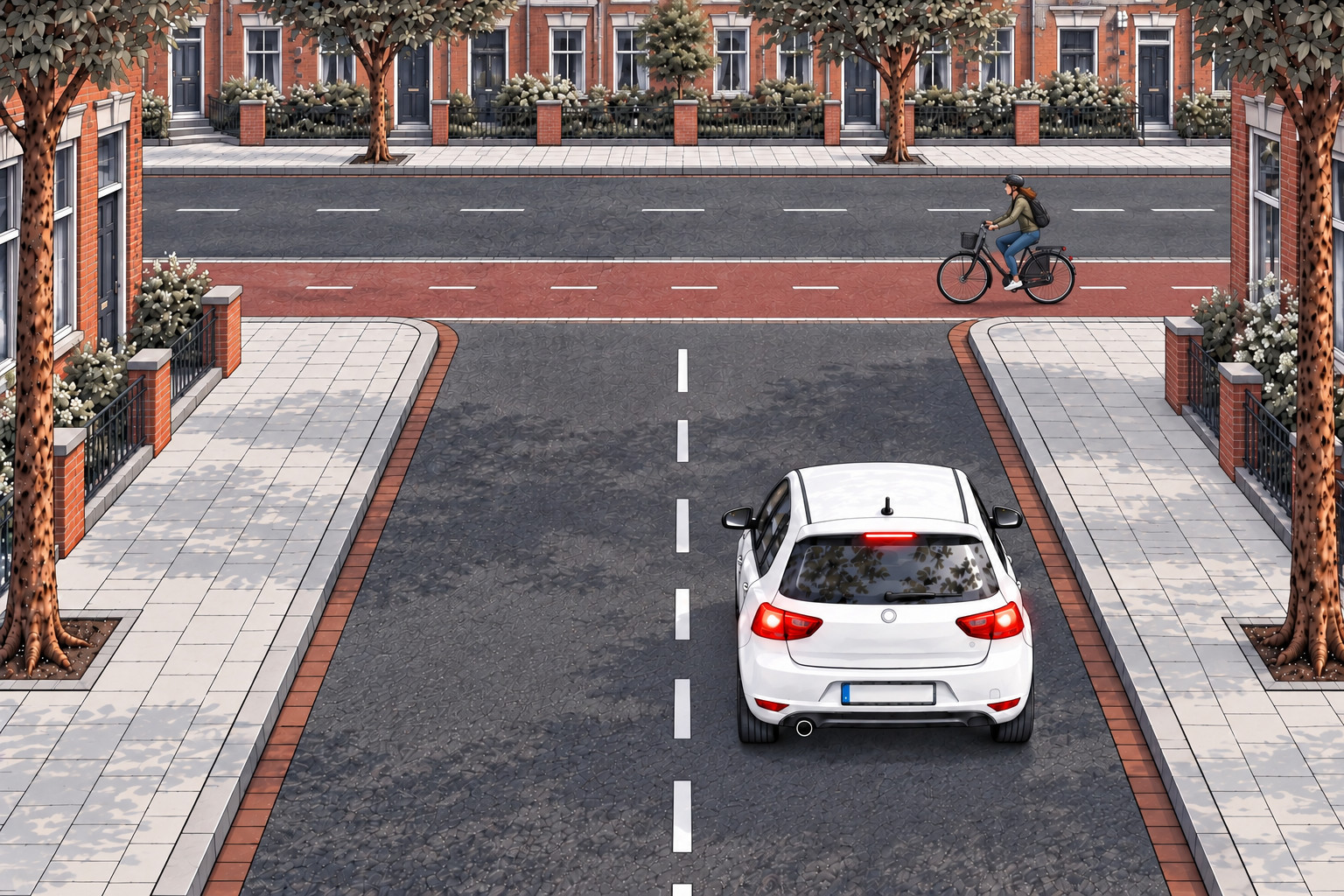
Restart the engine using the procedure for your car. Before moving again, reopen the traffic picture. Check what has changed while you were stationary: the light, pedestrians, cyclists, the vehicle behind you, the space ahead.
A restart is not permission to drive away using the picture from ten seconds ago.
Continue without carrying the stall with you
Move off when it is safe and return to the normal rhythm of the drive. A stall can matter, especially if it creates danger, repeated loss of control or poor recovery. What it should not do is occupy the next five minutes of your attention.
Will one stall make you fail the CBR exam?
There is no useful blanket rule that one stall means fail. What matters is the effect on safety and control: where it happened, what traffic was around, and how you recovered. A stall in the middle of a junction, repeated stalls, or an unsafe restart carry more weight than a single stall on a quiet road that you handle calmly.
What changes on a slope, in a junction or in an automatic?
On a slope, preventing rollback comes first. Use the foot brake and, where appropriate for your vehicle, the parking brake while you prepare to restart. In a manual car, clutch, gear selection and start procedure depend on its mechanism; do not turn a generic checklist into a universal instruction. Automatic cars do not have the same clutch-related stall, but an unexpected loss of propulsion or a stopped engine still requires the driver to secure the vehicle and reassess traffic.
If the stall happens partway through a junction, establish where the car is and what traffic could reach it. Restart only in a way that preserves control; do not lurch forward because someone honks. If the vehicle will not restart and creates a hazard, follow the examiner’s immediate safety instructions and the vehicle’s appropriate warning procedure.
The part candidates forget after the engine restarts
A green light may have turned red. A cyclist may now be alongside the car. The vehicle ahead may have moved away. Treat the move-off as a new decision: look ahead, check the relevant mirrors and blind area, assess the space, then move when safe. One stall is not a published automatic-fail rule; what follows it matters.
Assessment reference: CBR Rijprocedure B, vehicle control. The outcome depends on the actual safety and control shown during the drive.
Driving Test Decoder
Recover without losing the next traffic decision.
The full guide connects vehicle control and recovery to observations, safe choices and the rest of the exam.
Complete guide · €27 + applicable VAT